Before the Next Disaster Strikes: Is Your Family Ready?
By Jeffrey L. Boney, The Block News Contributor If there is something that residents in the Greater Houston area
By Jeffrey L. Boney, The Block News Contributor
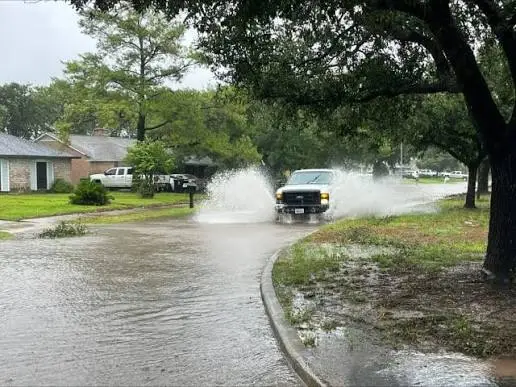
If there is something that residents in the Greater Houston area can always expect, it is that a hurricane, flooding, extreme heat, or other severe weather threats are bound to happen.
As are continue to challenge the Gulf Coast, emergency management and nonprofit leaders are encouraging Greater Houston residents to prepare now—not when a severe weather threat is already on the way.
As these severe weather threats continue to impact the Gulf Coast, emergency management leaders, nonprofit organizations, and community leaders are encouraging Greater Houston area residents to prepare now—not just when a storm is approaching or happening in real time.
That was the central message at a recent disaster preparedness panel discussion featuring Brian Murray of the Harris County Office of Homeland Security & Emergency Management (HCOHSEM), Brooke Campbell of United Way of Greater Houston, and Kara Cook-Schultz of the Greater Houston Community Foundation.
As these emergency management professionals convened, the conversation centered on the importance of disaster preparedness beginning at home. They emphasized the need to help residents understand available local resources, create personal emergency plans, and provide trusted communication tools that are needed before, during, and after a crisis.
Brian Murray, who serves as Deputy Coordinator for Homeland Security & Emergency Management, and Public Information Officer, shared first. He has spent his career developing the processes and technology used to communicate critical emergency information to the public during disasters.
Murray emphasized that preparedness should be a year-round priority.
“We live in an area that faces more natural hazards than almost anywhere else in the country,” said Murray.
Murray stated that hurricanes, flooding, tornadoes, extreme heat, and other emergencies require residents to have a plan before disaster strikes. He also encouraged families to sign up for emergency alerts, rely on trusted information sources, and build emergency supply kits over time.
Rather than purchasing everything at once, Murray suggested adding a few extra nonperishable food items and bottled water during regular grocery trips.
“We don’t expect people to spend hundreds of dollars overnight,” Murray explained. “Preparedness is something you can build a little at a time.”
Brooke Campbell, who serves as Director of Community Outreach and Disaster Recovery at United Way of Greater Houston, brought her extensive experience in volunteer engagement, disaster recovery, and community education to the discussion.
Passionate about helping neighborhoods recover stronger after disasters, Campbell said resilience begins long before an emergency occurs.
Campbell highlighted the work of the Greater Houston Disaster Alliance—a partnership between United Way of Greater Houston and the Greater Houston Community Foundation—which helps nonprofits, government agencies, businesses, and community organizations coordinate disaster preparedness, response, and long-term recovery across the region.
“The relationships we build on blue-sky days are what make our communities stronger when disasters happen,” said Campbell.
Campbell also reminded residents that United Way offers a free household preparedness plan and that dialing 211 connects residents with critical resources, including food, housing assistance, transportation, mental health services, and disaster recovery support.
Kara Cook-Schultz, who serves as the Director of Disaster Recovery and Community Resilience at the Greater Houston Community Foundation, came with her unique perspectives. She leads regional initiatives focused on disaster preparedness, recovery, and resilience.
An environmental attorney by training, Cook-Schultz works across government, nonprofit, and private-sector organizations to strengthen disaster readiness throughout Greater Houston. She emphasized that protecting vulnerable populations—including seniors and residents with access and functional needs—requires neighbors, families, and community organizations to work together before emergencies occur.
Cook-Schultz encouraged eligible residents to register with the State of Texas Emergency Assistance Registry to receive additional support during disasters.
Throughout the discussion, panelists agreed that disaster resilience is a shared responsibility built through planning, partnerships, and community engagement.
The takeaway was clear—emergencies may be unpredictable, but preparedness does not have to be.
While no one can prevent the next disaster, every family can take meaningful steps today to be better prepared for whatever tomorrow may bring.
Building a resilient community starts long before the storm arrives—with informed residents, strong partnerships, and a commitment to helping one another.

Photo Credit: Jon Guevara of Our Voces/Latin Touch Media